Get Estimate & BookSame-day available

Zeus Services, London

Rodent Contamination Cleaning & Disinfection in London

Safe removal, cleaning and disinfection of rat and mouse contamination

Rats and mice leave droppings, urine and nesting material behind, and public-health bodies identify contact with these as relevant to several infections. Where rodents have been active, the contamination needs dealing with as well as the animals.

We remove it safely, clean, disinfect, and coordinate with rat control, mouse control and rodent proofing. Where insulation has to come out, see loft insulation removal and replacement.

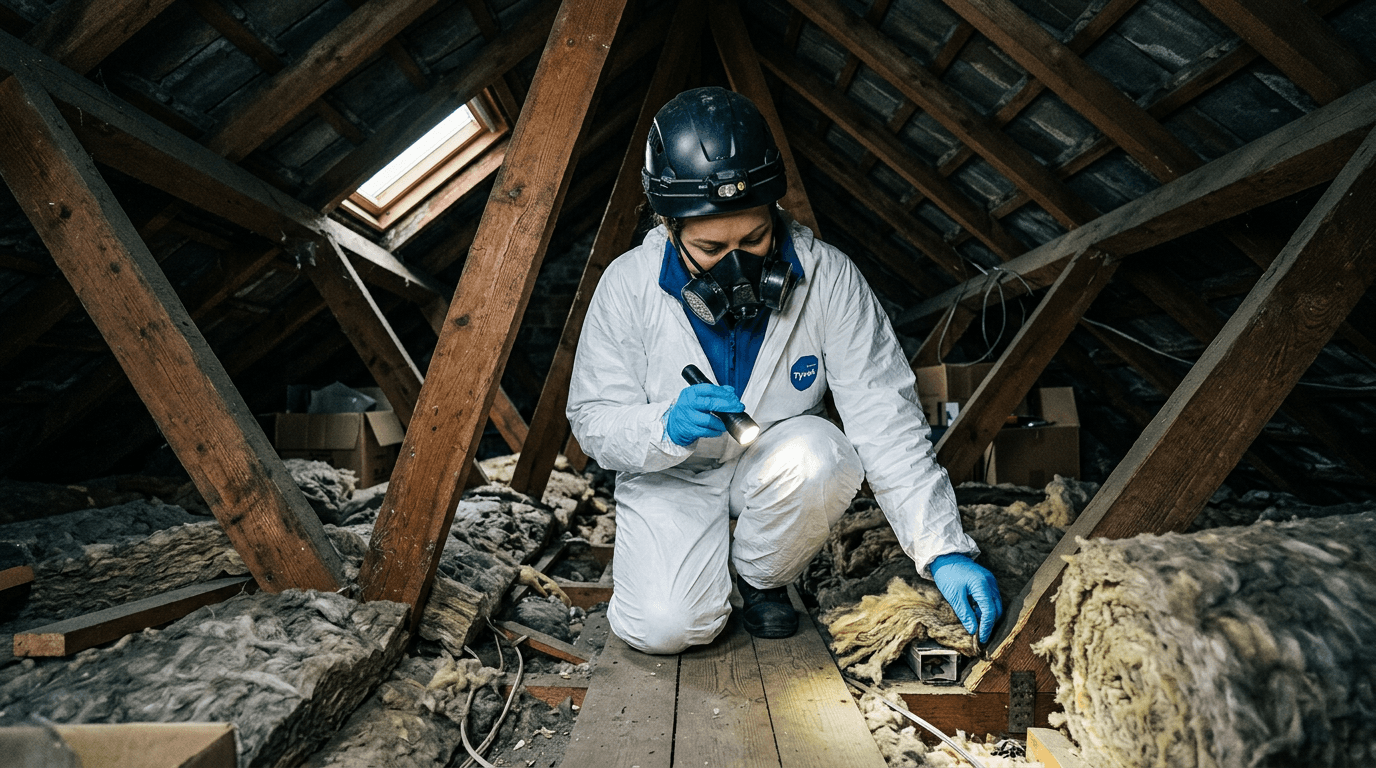
Technician in protective clothing and respirator inspecting a loft for rodent contamination
Illustrative image.

What We Clean and Remove

  • Rat and mouse droppings

    Wet removal and bagging, without dry sweeping or vacuuming, followed by cleaning and disinfection of the surface.

  • Urine-contaminated materials

    Assessment of insulation, boards, stored items and soft materials, and removal where they cannot be cleaned reliably.

  • Nesting material

    Careful removal of nests, bedding and gnawed debris from voids, lofts, cupboards and under floors.

  • Dead rodents and decomposition

    Removal of carcasses and cleaning of affected surfaces. See also our dead animal removal service.

  • Lofts, kitchens and voids

    Different spaces need different methods. We scope each area separately.

  • Waste handling

    Contaminated waste is double-bagged and disposed of correctly.

Our Safe Working Method

  1. 1

    Stop the source

    Rodent control and proofing are arranged so the problem is not continuing while we clean.

  2. 2

    Protect and ventilate

    Suitable gloves, respiratory protection and protective clothing are worn, and the area is ventilated before work begins.

  3. 3

    Wet and remove

    Droppings and nesting material are wetted and removed, not swept or vacuumed dry.

  4. 4

    Clean and disinfect

    Surfaces are cleaned, then treated with a suitable, appropriately authorised disinfectant for the full contact time.

  5. 5

    Dispose of waste

    Waste is bagged and disposed of through the correct route.

  6. 6

    Proof and monitor

    Entry points are identified and, where agreed, proofed to reduce the chance of recurrence.

Why Rodent Contamination Matters: Documented Cases

Below are the first three of nine documented cases. The full set, with UK statistics and every source, is in the rodent-borne diseases evidence guide.
Case 1Viral

Seoul hantavirus linked to a rat-breeding facility, Germany

Disease
Seoul virus infection (hantavirus)
When
Illness in March 2024; published October 2025
Where
Central Germany
Patient
Previously healthy 44-year-old woman

The patient became unwell in March 2024 with fever and fatigue, and developed severe acute kidney injury. Laboratory testing confirmed Seoul hantavirus infection. She needed three haemodialysis sessions and her kidney function later returned to normal.

What the source confirms

  • Seoul hantavirus infection was confirmed by laboratory testing.
  • She had visited a private pet rat breeding facility about five weeks before symptoms began.
  • Virus sequences from rats at the facility closely matched the virus found in the patient.
  • The four pet rats she owned showed no evidence of Seoul virus.

What is probable or presumed

  • The authors judged that infection was probably acquired through aerosols during the facility visit. This is the investigators' interpretation of the evidence, not a directly observed event.

Why it matters

A documented link between an infected rat-breeding environment and human infection. It shows why investigators trace animal and environmental exposure when a patient has unexplained kidney injury.

Limits of this case

Do not generalise this to every rat infestation or every home. It concerns a breeding facility with infected animals.

Source: Seoul virus infection acquired at a private pet rat breeding facility, Germany (opens in a new tab). Emerging Infectious Diseases (CDC), October 2025. Checked 29 October 2026.

Case 2ViralFatal outcome reported

Fatal hantavirus pulmonary syndrome in a hotel worker, California

Disease
Hantavirus pulmonary syndrome
When
5 to 6 March 2025
Where
California, United States
Patient
26-year-old hotel worker

The worker developed flu-like symptoms including fever, cough, nausea and diarrhoea. He attended an emergency department on 5 March and returned the next day after deteriorating. He died on 6 March. Post-mortem testing confirmed hantavirus pulmonary syndrome.

What the source confirms

  • Post-mortem testing confirmed hantavirus pulmonary syndrome.
  • The California FACE investigation identified likely workplace exposure to airborne particles associated with deer-mouse droppings.
  • The investigation highlighted gaps in worker training and disease-prevention procedures.

What is probable or presumed

  • The exposure was described as likely. The report does not establish a specific room or task as the proven source.

Why it matters

Relevant to workplace risk assessment, rodent contamination, staff training and safe handling of rodent waste. Staff who clean or enter affected areas need to know what to avoid and what protection to use.

Limits of this case

This does not show that the whole hotel was infected, and it does not suggest that fogging alone would have prevented the death.

Source: California FACE investigation 25CA004: hotel worker fatality from hantavirus pulmonary syndrome (opens in a new tab). California Department of Public Health, Fatality Assessment and Control Evaluation (FACE) programme, 2025. Checked 29 October 2026.

Case 3Bacterial

Severe leptospirosis in Wales

Disease
Leptospirosis
When
Published 2025
Where
Wales, United Kingdom
Patient
54-year-old man

The published clinical case describes a two-week illness with fever, nausea, muscle pain, diarrhoea and reduced urine output. His condition worsened and he needed intensive care and haemofiltration. Leptospirosis was confirmed by laboratory testing.

What the source confirms

  • The diagnosis was laboratory-confirmed leptospirosis.
  • He needed intensive care and haemofiltration.

Why it matters

Severe leptospirosis can occur in the UK and may at first resemble other illnesses, so a history of possible animal or water exposure matters to clinicians.

Limits of this case

This is not a proven case of infection from a rat-infested building. The source does not establish that route of transmission.

Source: Severe leptospirosis case report, Wales (opens in a new tab). Peer-reviewed clinical case report (PubMed Central), 2025. Checked 29 October 2026.

Products Selected for Their Intended Use

At Zeus Services, we use only appropriately approved or authorised products from the relevant regulatory authorities for their intended uses. Products are selected according to the treatment required, the surfaces involved and the applicable instructions for safe and effective application.

Our approach includes following the relevant product instructions, application conditions, required contact times and safety precautions. We do not assume that one product or application method is suitable for every contaminant.

Product authorisation and treatment effectiveness are different things. Authorisation shows a product may be used for its stated purposes under the relevant regulations. Whether it is effective against a particular organism depends on the manufacturer's documentation, the surface, the application method and the contact time. We do not make efficacy claims that the product documentation does not support.

Background on product regulation: HSE biocides guidance (opens in a new tab).

Frequently Asked Questions

Can I clean rat droppings myself?

Small amounts can be dealt with by following public-health guidance: ventilate, wear gloves and a suitable mask, wet the area with a suitable disinfectant, wipe up with disposable material and bag the waste. Larger or hidden contamination, especially in lofts, is better handled by a professional.

Why should I not sweep or vacuum droppings?

Dry sweeping or vacuuming can put particles from droppings, urine and nesting material into the air, where they can be breathed in. Wet cleaning avoids that.

Does loft insulation always have to be removed?

No. It depends on how much contamination there is and how far it has spread. Heavily soiled or urine-soaked insulation usually has to come out because it cannot be reliably cleaned. We tell you what we find before we quote for removal.

Do the rodents need dealing with first?

Yes. Cleaning a space that rodents are still using is wasted effort. We coordinate pest control, cleaning and proofing so the job is done in the right order.

Is fogging included?

Only where it is suitable. Fogging does not remove droppings or soiled materials, so it can only follow removal and cleaning, and it is not needed on every job.

Will I definitely catch something from rodent droppings?

No. Most exposure does not lead to illness, and the risk depends on the species, the disease present locally and how you were exposed. Sensible precautions are still advised. See our evidence guide for the cases and limits.

Plain-English guides from our technicians, before you book.

Read all pest control guides

Request a Disinfection Assessment

Tell us about the property and what you have found. We will assess it and give you a written scope of work.

Book online or speak to our London team.