
Guidance
What to Do After Finding Rat Droppings in a Loft
A calm, practical sequence: stop, protect yourself, deal with the rodents, then clean and proof.
Zeus Services · · 7 min read
Stop, do not disturb it
Finding droppings in a loft is common and usually manageable. The first step is not to start sweeping or vacuuming. Dry droppings, urine-soiled insulation and nesting material can release fine particles when disturbed, which is why public-health guidance recommends wet cleaning.
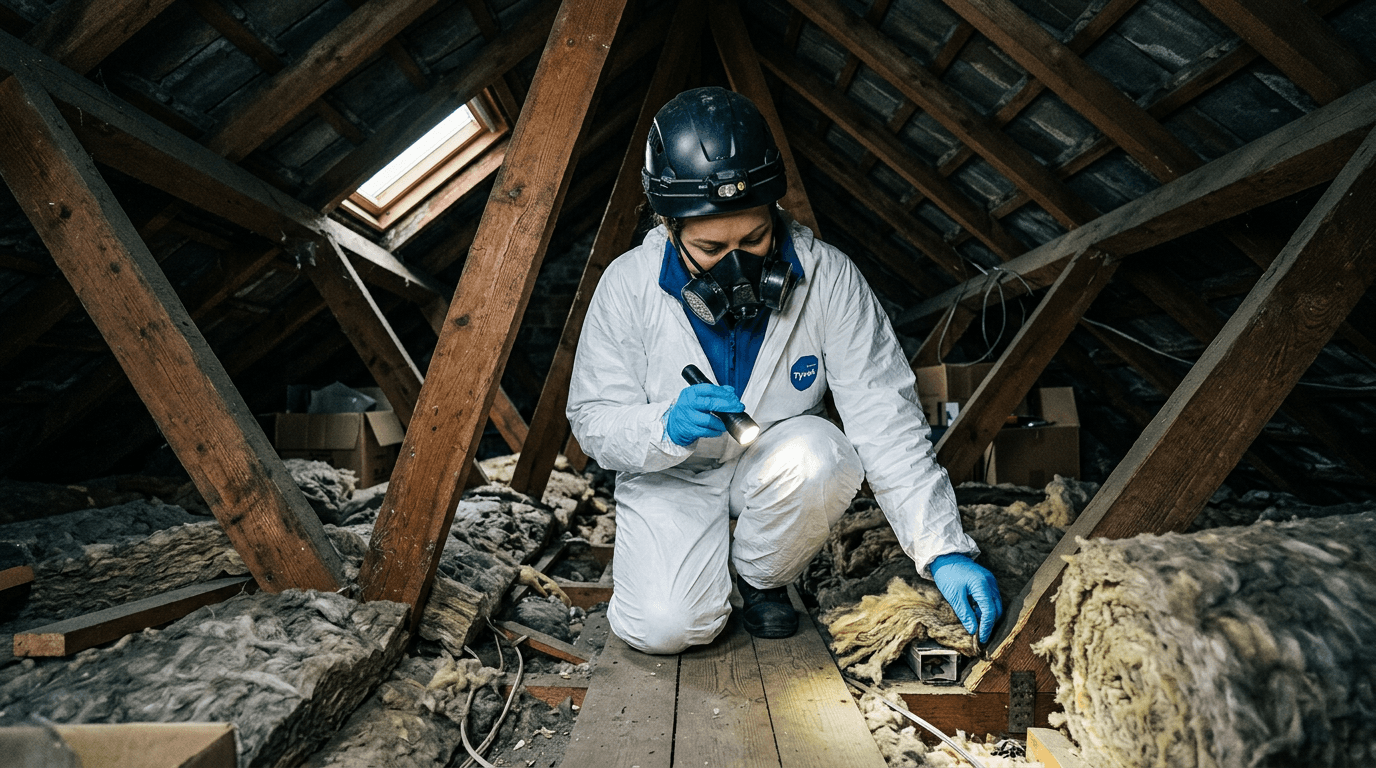
A calm sequence
- Stay out of the loft and keep children and pets away.
- Check whether the rodents are still active. Fresh droppings, noises at night and gnawing suggest they are. See rat control, or mice control if the droppings are small and rice-shaped.
- Deal with the rodents first. Cleaning an area that rodents are still using only repeats the problem.
- Find and seal entry points through rodent proofing, including exterior rodent proofing for eaves, drains and ground-level gaps.
- Remove and clean contamination with suitable precautions, wet methods and appropriate waste handling.
- Replace insulation that is soiled or heavily contaminated.
Contaminated insulation
Insulation is porous and cannot be reliably cleaned once soiled with urine and droppings. Affected sections are usually removed and replaced. Insulation matters for energy use, so replacing it is not only a hygiene issue. Our loft insulation removal and replacement service covers removing the affected material, taking the waste away and fitting new insulation.
Waste handling
Contaminated material should be bagged without being shaken or compressed, double bagged and sealed. Ask your local authority how to dispose of larger quantities. Professional contractors should dispose of waste through a compliant route.
When to call a professional
- Large amounts of droppings or widespread staining;
- Confined, low or hard-to-reach loft spaces;
- Dead animals or nests in inaccessible spaces;
- Anyone in the home who is vulnerable to infection.
Our rodent contamination cleaning service covers assessment, removal, cleaning and disinfection. We will tell you honestly if the job is something you can safely do yourself.
References
Sources and Evidence
Cleaning up after rodents (opens in a new tab)
- Publisher
- Centers for Disease Control and Prevention
- Published
- Maintained page
- Disease
- Rodent-associated disease (general)
- Location
- United States
- Evidence type
- Official guidance
- Checked
- 29 October 2026
Supports: Wet-cleaning principles, why sweeping and vacuuming dry droppings is discouraged, protective precautions and waste handling.
Limits: US guidance. Its principles are used as recognised public-health practice; UK product use must follow HSE and manufacturer requirements.
- Publisher
- Health and Safety Executive
- Published
- Maintained page
- Disease
- Not disease-specific
- Location
- Great Britain
- Evidence type
- Regulator guidance
- Checked
- 29 October 2026
Supports: The UK regulatory framework for biocidal products, including the need for product authorisation before supply and use.
Limits: Authorisation shows a product may be supplied for its stated uses. It does not prove effectiveness against a named organism in a given setting.
Related services and guides
Need a Contamination Assessment?
Describe what you have found and we will advise honestly on the next step.